BacklinksSEO & GEOAIO / AEO
AI Search Engine Optimization
Rank Top on Google, ChatGPT & Perplexity
✦ High-Authority Link Pyramids & Tiered Links
✦ Generative Engine Optimization (GEO & AEO)
Next-Gen
GEO & AEO
AI Visibility Matrix
100% Index Guarantee

What Is Spam Score And How To Reduce It?

how to reduce spam score

What Is Spam Score And How To Reduce It?

Mozs spam score is a proxy for your sites quality and reputation, and it may impact the way that Google ranks you on the SERPs. Checking the spam score of a website is an extremely simple process, and you can use tools like Google Spam Checker, Moz Toolbar, etc., to check if your site has a spam score.
To lower down your websites spam score, then we need to look for spammy and low-quality links which are connected with your site and need to be removed by making a list of those links. Use the “Remove links” tool found inside of the Open Site Explorer to remove all the spammy or low-quality links you have found on your profile.
The main reason why any site increases this spam score is because of spammy links, and if your site has any low-quality backlinks, there is a possibility that you will get a higher spam score for your website.

Websites that have links to external websites in their menu, footer, or sidebar will increase their sites spam score. If more links from external websites are used on a lot of blog posts as anchor texts, it will result in an anchor text-heavy page, thus increasing spam score.
To avoid getting spam scored by Moz, one needs to keep a proportionate link to domain ratio, because having a non-uniform proportion of external links for various domains results in a higher spam score. The number of domains that you link to: Again, spammy sites are likely to have links to abnormally high or low numbers of external domains. Spam sites will fall on the extreme ends of the spectrum, either having an abnormally high or low number of external links relative to their sites size or volume of content.

how to reduce spam scoreThe spam score algorithm will assume the quality of content on a website like this is extremely poor, and so other sites are unwilling to accept their links. If such type of websites has just a few backlinks, the spam score increases, the search engine robots, and the sophisticated algorithm checks for age and the amount of content on a site. If the site is not linked with established websites, the website is considered low-quality. Let us say that your domain is about one year old, and your site has some links from poor-quality websites, then in that case, you may avoid spam score metrics.

The spam score is a proxy for how likely it is that the domain may have been sending out spammy link-building tactics, both currently and in the past. An increased spam score does not mean a site is spammy, but represents the proportion of users who are being punished for linking to your site. It has been theorized, but never proven empirically, that having links from websites with higher levels of Spam score linking to your site may have negative effects on your sites organic search rankings.

Websites with high Spam Risk are at an increased risk of having their content buried in the SERPs. A couple spammy links will generally not get noticed and might not be cause for concern, but if it becomes too many, you are going to run into problems, including getting a penalty from the search engines. If you are getting manual spam penalties from Google, look at your Links to your Site section in Google Search Console to see any bad links.

These days, the search engines mostly ignore bad links rather than giving you a penalty for them, they are not going to hurt you.

If you website has a lot of traffic and has lots of pages, and overall site performance is dropping, you may want to take a look at some link checking tools, but the best one is the Moz Link Explorer. Although links have a lot of good effects on websites and SEO, you should take care and avoid having any spam.
If possible, it is best to avoid having it on your site — either in your webpage copy, or especially your anchor texts (these are words that you use to link to another page within your website, or an external website). Most spam websites are focused on words associated with webspam, like casinos, hacking games, adults, drugs, and so on, mostly as anchor texts. Using too many links, tables, and the like within your newsletter increases your risk of getting extra points for spam.

Because typically, spam sites will make URLs that are driven by keywords, instead of the branded domain that an authentic company would more likely use. Since most businesses and websites would be expected to gain referral links naturally using variations of their brand names as their anchor text, Moz will apply the spam score flag to any sites that have an especially low volume of brand-related anchor texts. If Mozs crawler cannot find many valid URLs within a web domain, it might consider it a kind of placeholder website, and Mozs Open Site Explorer will assign it a Spam Score flag, since it does not consider sites like this to be of any actual tangible value.

Google places great weight on accountability, and this is reflected by the Open Site Explorer giving a Spam Score flag to websites that have no easily-findable contact information, like a link to a linked email or an established profile on a social network. PageRank, a proprietary ranking algorithm by Moz, gives every site a score between 0-100, based on how authoritative the sites linking to it are. To determine where your website ranks for particular keywords, Moz uses a ranking system called link-metric scores.

A website that has a 100 score on Moz Link Metrics is likely to outrank a website with a score of 70, even though this website has a higher number of backlinks. A higher link metrics score indicates your website is trusted, authoritative, and well-linked with sites that share a similar target audience. This spam score criterion is basically a combination of site Link Variety and a ratio of followed to unfollowed links, as the referring domains ratio of the sites link profile should follow similar parameters as those related to overall link count.
Link pyramid Backlinks Is The Best Link Building For Seo

linkpyramid backlinks is the best for seo

Link pyramid Backlinks Is The Best Link Building For Seo

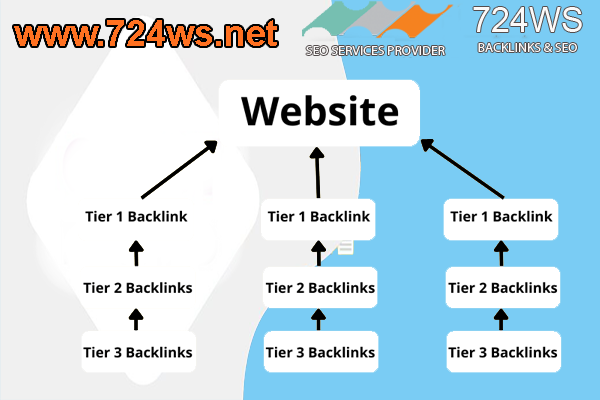
This pyramid of links would serve as an effective strategy to accumulate high-quality backlinks, and to re-direct the links back to these backlinks. As I mentioned earlier, a tiered link building is composed of three levels of backlinks that are created just for strengthening existing quality backlinks, and maybe even web pages within the website. The Link Building Strategy allows to send quality backlinks to your websites website, to strengthen these quality links, and increase indexing rates for these backlinks.

The more high-quality links pointing at your site (and that are a part of your backlink profile), the higher up in the rankings you should be in Google, and thus, the higher level of organic traffic you should get. One of the best ways to improve the visibility and rankings of your site is by getting links from high-quality sources. By creating high-quality, up-to-date content, and sharing high-quality with relevant publishers, you can create links that help your website rank better in the search engine results.

linkpyramid backlinks is the best for seo
You might want to consider using an advanced link building strategy to improve the authority of your website and increase search engine rankings. If you want to make sure that your site ranks high on the search engines, you will want to study link-building strategies that are working for high-ranking competitors. If you are looking to boost the rankings of your site and gain more organic traffic, then you should consider using infographics with instructions as a part of your link-building strategy.

The sites that will host your links should be trustworthy and relevant to your websites content. If you post your links to sites with irrelevant content, search engines will mark them as spam, and your main site will get blocked soon thereafter. If you post your links on pages with irrelevant topics, the search engine will flag your posts as spam, and your webpage will be banned soon after.
Having your links published in banned pages will not be beneficial, and certainly not have any positive responses. Having your links published in banned sites will have no benefit and, more than likely, no favorable response. When choosing proper sources for your backlinks or guest posts, you must select links that are appropriate for that website.
The sites that you are going to use as a backlink must directly relate to your webpages topic and content. The pages you plan on using as links should be tightly connected to your pages subject matter.
Secondarily, make a subcategory which must be linked to by an official social media page. Create great content for your social media accounts, which will serve as a second link type (Tier 2).

Make sure that your top links are highly valuable, even if it means higher costs, build some tier two links, and ensure they are redirecting backlinks from tier one, tier three of the pyramid should consist of comments, forums, profiles, or bookmarked sites that have links to the backlinks from tier two, and make sure you index all of your links. Remembering means you may want a range of links on each level of your link pyramid, not just one, two, or three backlinks. When those are focused at level 1, it is going to increase the quality of all of those links right there at level 1.
For example, if tier 1 includes 10 links, then you would build 100 links for Tier 2, and 1,000 links for Tier 3. Here, you simply have to build as many links as possible — it does not matter much which types of links you are using. Search engines can determine where the link comes from, and pretty easily which kind of link it is, and if all your link building is focused on a single kind of link, it is not going to feel that natural.
Link pyramids are different than schemes used to boost the status of more valuable links that are leading to a site that you are doing SEO on. These pyramids (as well as other black-hat SEO strategies) are typically created automatically, contain artificial links, with spammy content, which can easily be detected by even basic Google algorithms. We would NOT recommend buying the super-attractive bundle of links pyramids 1000 links for $10 USD, since that solution is pretty far off from the modern, white-hat SEO practices, which are focused on natural link growth and the high-quality content created.

As we already know about the link pyramid, it is also important to know about the benefits that come from creating links. After considering elements of a pyramid, SEO experts may realize the requirements and aspects in order to more efficiently focus on building those links. After reviewing these, an SEO specialist will have a better understanding of the requirement and the aspects to consider in order to focus more effectively on building these links.

A Backlink Building Service presents a number of webpages which may suit your needs, positioning them as a place of maximum effectiveness in terms of trade. These backlink building services are available for trusted links with a good reputation and ratings. It gives you a chance to increase your traffic, enhance your backlink profile, and reinforce your backlinks with cheap links.
A layered backlinking strategy allows you to artificially boost a particular pages Page Authority score, which contains a link to your site, and ultimately boosts the ranking of your website. Tiered backlinking will perform manual actions on links in Tiers 2 and 3 as they are from less-than-legitimate sources — but your Tier 1 links will stay intact.

Tier 3 backlinks are only used in strategies like link pyramiding to manipulate the Google robots through links these days.

A couple variations on a link-building pyramid structure include including horizontal links between the layers to give the appearance of more organic flow, or including step-by-step atunnelsa that would go straight from several lower-tier sites to the top page, so as to build up a solid set of quality links supporting a page. If we find the mid-tier is not actually creating much in the way of incremental organic rankings for the main page, then we may want to consider adding more lower-tier links into the link building pyramid structure in order to increase the overall project quality.

Why Backlink Is So Important In Seo?

why backlinks is important for seo

Why Backlink Is So Important In Seo?

Backlinks deliberately placed mid-sentence are important for SEO, as content is influenced by having these links. When people talk about how important backlinks are to SEO, usually what they are talking about is a linkas ability to increase page ranking. While backlinks are important for SEO, they have other benefits besides just improving a pages ranking.
Backlinks are still important to SEO because they are a core element of Googles original PageRank algorithm. Backlinks are important for SEO because they tell Google that another resource finds your content valuable enough to link to within its own content. High-authority backlinks may also make it easier for the search engine to display you in its results, since it is seeing a page with lots of links from other trusted sites.
When a number of websites are linking to the same page, the search engines can guess the content is valuable, and it is worth ranking in a search engine results page (SERP).
While Googles methods for ranking websites has become more complex, links still play an integral role. While links are considered as ranking factors now by Google, the principle has not changed: High-quality links bring healthy traffic to your website.
Now your website is seen as having quality content, and the backlinks help in getting higher rankings in Google too. In fact, our Search Engine Ranking Correlation Study found that the number of sites linking to you (not total number of backlinks) correlated more strongly with ranking in Google than any other factor.

importance of backlinks for seoEven with the thousands of changes that Google has made in the Google ranking algorithm since, backlinks are still the primary signal for rankings, and Google has confirmed backlinks are still one of Googles top 3 search engine ranking factors. In fact, it was confirmed by Google itself as early as 2016, that, along with content, backlinks are one of the two most important signals used in ranking websites. Backlinks are like votes, telling Google a specific site is trustworthy, and that the content on that site is valuable, authoritative, and helpful.
If your website has lots of backlinks that have little to do with the content that they are linking to, Google notices it and ranks you lower. This is the way that Google views backlinks as votes of popularity for a site or web page, and there is a strong correlation between those that have more links linking back to them, and higher rankings from those that have more links linking to them. The more related two websites are, the higher the relevance score for links, and the greater chance for higher rankings in the Google search rankings.
This means Google can feel confident that pages with lots of links are worthy of showing up on top of a search results page. The search engine will take into account the quality of the site content vs. the number of inbound links, so links alone are no guarantee for the top pages on the search engines. One can get better results through inbound links by properly placing links in content of the webpages.

Referred to in SEO as inbound links or outbound links, backlinks are links pointing from one page in a site to one in another. A backlink is placed in a font, the anchor text, or an image, or even your websites URL, providing when clicked, a user is directed to a page on your site. In other words, the backlinks are not placed on your site: they are leading to your site from elsewhere on the Internet.
Two, Backlinks act as a testimonial, or a vote of confidence, for your website, and that boosts credibility. In a noisy competitive landscape, backlinks are the vote of confidence of one site over another, which is a convincing sign of value for Google. Without high-quality backlinks redirecting to your site, you are missing one of the most important factors for rankings, the factor that can demonstrate you are a credible authority in your industry, and therefore deserving of higher rankings for your keywords.

Yes, quality backlinks will help you rank easier than merit alone, but there are things you can do as you start to get links, so you can outrank a site or page with 10x or 100x the number of links that you do. High-authority backlinks do help you get up search engine rankings a little quicker, but what they do not do is help your site stand out against what others are doing. High authority backlinks are ones that come from trusted sources, like a newspaper (Google probably trusts a link from The Guardian) or from a well-known site that has earned credibility.

Low authority backlinks may be from various sites you may not realise are highly page-ranking, like Web 2.0s and forum profiles, and what makes these links so effective is that they transfer very little link juice, meaning that the risk of having them de-indexed is low. When the search engine spots spammy backlinks in your link profile, what it does is devalue the pages from which those links are coming, and what this means for your site is reduced visibility and rankings. Within Search Engine Optimization (SEO), your backlink profile and trustRank are some of the most important factors when it comes to link juice, since link juice is important to the sites link profile.

If Google sees a high-profile site within your industry linking to your content, then Googles going to assume you are high authority too. Just because a authority site in the industry links to your content does not mean that you are going to experience a boost in rankings overnight.
Most people agree that links, content, searcher intent, and the experience of the on-page elements affect rankings. For instance, one industry study we conducted found that links are still the top signal in ranking by Google.

Improve Seo On Dropshipping Stores With 724Ws backlinks

droppshiping stores seo by 724ws backlinks

Improve Seo On Dropshipping Stores With 724Ws backlinks

You may want to head over to this link- How To Score A Perfect 100% On Google PageSpeed, for more details about how you can completely optimize the speed of your site, without losing visitors to your SEO for Dropshipping Stores. Of all things said, there is no short-cut way to answering your How to Improve SEO for Shopify Dropshipping Stores question, nor is it a quick and easy way to increase your traffic.

Here are the most basic SEO tips for dropshipping stores you should implement both in the blog of your shop, as well as the categories pages.
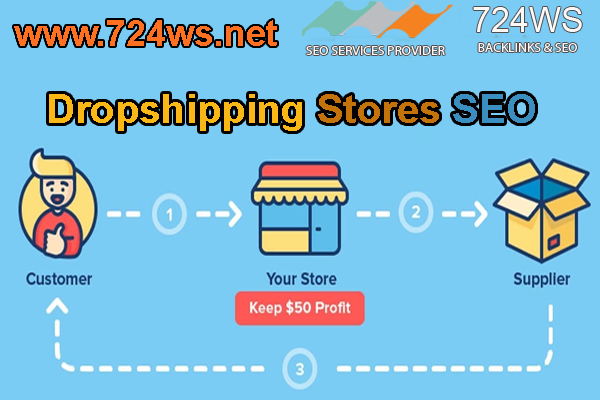
If the majority of your sales are coming from Google, then you would find it fun to focus on SEO strategies for your Dropshipping eCommerce stores. Ultimately, what keywords you are looking for depends on what SEO Google Dropshipping strategies you have put into place. In Dropshipping SEO, inbound links tell search engines what pages you want to rank for certain keywords.
As you can see from the picture, keyword dropshopping will show you which links are searched most frequently online. The top two links are from Shopify, meaning when the majority of people are searching for dropshopping, they are going to be inclined to look at content on Shopify more. SEO is important to dropshopping stores, as it can help them get higher rankings in the search engines, meaning that more people will find their shop and are more likely to come to it.

dropshipping stores seoChoosing the right keywords for your dropshipping store is extremely important for SEO purposes, but can also help you boost conversions and sell more products. For your dropshipping business to be successful using SEO techniques, you should focus on optimizing keywords as much as possible. If you own, or are considering starting, a dropshipping business, it is essential that you understand what SEO is all about, and how we can leverage it for this kind of business.
As a dropshipping shop owner, one thing that you should know before building a site is how to use Search Engine Optimization (SEO) for your business. The secret to ranking high in the search engines and making sure that your customers will first find you when they require your products is Search Engine Optimization (SEO). Search engine optimization (otherwise known as SEO) is a strategy that helps to boost organic traffic flow to your site by improving your search engine visibility whenever potential customers are searching for your products.

You can think about on-page SEO as something that you do to optimize your stores content and structure to make it more likely to rank highly for a particular keyword or phrase. On-page SEO is important for Dropshipping stores, as it helps to get your shop listed in the search engine results pages. Building links on your webpage is a crucial SEO tactic since it helps boost the rankings of your shop on Googles search results.
Link building is when someone creates a piece of text that has a hyperlink that links back to your site, and is a very important SEO ranking factor. Some websites will not let you use links from their site because a lot of websites used it before as cheat way of increasing SEO rankings. Links, inbound, outbound, and backlinks are all highly critical aspects to understanding SEO for Dropshipping on Shopify.

Dropshipping sites have a unique set of SEO hurdles to overcome as opposed to stores who keep in-stock, which is why it is essential to understand SEO. Dropshipping websites have some unique sets of SEO challenges vis-a-vis regular ecommerce stores, that need to be taken into account. If you want your dropshipping business to take advantage of the most convenient forms of traffic on your site, invest in SEO.

Your content marketing strategy for a dropshipping site is crucial for your categories and product pages to succeed. With all these tips for your dropshipping companys website, you are increasing the chances that your site will rank well on the search engines. Now, let us dive in the details on the steps that you, or a team of SEO experts, should be taking to make sure that your dropshipping site is successful on the web.
With the right techniques and research, our mini guide on SEO for Dropshipping Stores will make building your own legacy easier than you thought. Put these SEO tips for ecommerce in action, boost the rankings on Google, and improve your dropshipping ecommerce stores performance. If you are able to nail product descriptions, you are on the right path of knowing how to SEO your eCommerce store.

Whether you own an eCommerce shop that is powered by data or dropshipping, or if you stock products, this beginners guide to SEO gives you the basics for better optimizing your store with SEO. So, whether you are starting out in the business of a dropshipping ecommerce business or are an established company, hopefully, this article provides you with the fundamentals for better optimizing your store through SEO to search engine ranking pages. SEO for online stores has certain specialities that we are going to elaborate on through the article, which focuses on giving visibility to product categories in our catalog.
Shopify SEO, therefore, can be defined as the set of all of these efforts or techniques which optimize the Shopify website in order to improve its chances to rank better on the search engines. As you become more acquainted with different concepts and factors which are crucial for SEO, you quickly understand how important it is to optimize the product pages using keywords, links, etc. The first step in implementing SEO on your dropshipping shop is to determine what keywords you want to rank for.

For better SEO rankings of your dropshipping business, you need to focus specifically on the content length of each of your site pages.

The length of content on each page of your website plays a major role in SEO rankings for your dropshipping company. However, with dropshipping SEO, a lot of blackhat tactics that you find out there can end up getting your site penalized.
When you actually do see results coming, you will discover that Shopify dropshipping SEO really does play a key role in growing organic traffic to your ecommerce business. For that reason, I created this follow-up guide to SEO for Dropshipping, as well as every facet of SEO for online stores, as well as the nuances we need to consider in order to implement effective SEO strategies for dropshipping store SEO for online stores.

Google Algorithms, Florida, Penguin, Panda, Rankbrain

google algorithms panda rankbrain

Google Algorithms, Florida, Penguin, Panda, Rankbrain

Googles Matt Cutts announced via Twitter an update coming soon for search results. Googles Matt Cutts revealed that Googles Panda algorithm has received a data update, which affected less than 0.1% of English queries.

While Google has not confirmed this, the data suggests another quality update related to the quality of Googles algorithms began rolling out around June 1, and that there was increased fluctuation in the rankings of searches made on June 8, 21, and 26.
Google has again updated Googles Panda algorithm, including a few new signals and reworking the way the algorithm impacts webpages. The Penguin update, announced the first time in 2012, has been improved over the years, and efforts were made to ensure the Panda algorithm produced more accurate results.

Notable changes include several updates for image searching, several updates to Freshness (including phasing out 2 older bits of the algorithm), and an update to Penguin 4.0. Another set of updates highlighted included the confirming of Panda 3.4, changes to anchor-text scores, updates to image-search, and changes in the way queries with local intent are interpreted. Major changes included improvements to Penguin 4.0, better detection of link schemes, changes to snippet/title rewriting, and updates to Google News.

google algorithms simple seoPenguin 4.0 updates occurred separately from the search index, rather than live, which is reminiscent of early Google Dance updates. Google initially targeted one large monthly update, then early updates were a mix of algorithm changes and large index updates (the so-called Google Dance).
The next big Google update, however, did not affect a lot of websites right away, since this update was more an indexing tweak rather than an algorithm tweak.
It revamped how Google crawls and indexes websites, and now Google is able to find and rank new content within seconds. Naturally, Googles next major update dramatically affected how pages were ranking, as well as the keywords that they were ranking for.

Many webmasters reported seeing changes to image rankings posted on the webpages Google Image following a potential October update to Googles Images search ranking algorithm.
While it is hard to confirm exactly what changes were made with this update, Google made a few small changes to Googles ranking algorithm, with some websites losing 30% traffic while others gained 20%-25% traffic. The big updates hurting low-value content likely included yet another Penguin algorithm update, and even more so for websites lacking in EAT (Experience, Authority, Trust).

Google occasionally releases large algorithm updates such as Penguin and Panda, which visibly affects search results and changes rankings. Google releases updates and changes to their search results on an ongoing basis, and many of these updates are tied directly to Googles search ranking algorithms. Updated several hundred times per year, Googles search algorithms are continually learning and changing how we view the internet.

Googles big updates, including Panda, Penguin, and Hummingbird, all utilize a machine learning algorithm called RankBrain, which is continually growing and has become a crucial component in Googles ranking algorithms. It seems Googles aim with all these algorithm changes (Googles algorithms, Penguin and Hummingbird) is to incentivize webmasters to post the best of their type. The update, known as Pigeon, dubbed Pigeon, improved the distance and position rating parameters (near me) as well as incorporating more ranking signals used by the core Google Web Search algorithm.

Google told Search Engine Land that Google has made updates to their Local Ranking Signals.

The Local Ranking Signals are designed to deliver better results for users.

Pigeon algorithm One of the updates made by Google in order to make local search algorithms more similar to the web algorithms, to deliver better services. Another refresh of Panda launched in 2014, which was intended to give users more relevant results when they searched for things locally.
Googles aim with update 2.0 was to help users discover better-quality sites that matched their long-tail queries. Googles Exact-Match Domains (EMD) update introduced a filter that prevented poor-quality sites from ranking well simply because their domain names matched the keywords users typically searched for in the search. The product review update had several technical issues, because spammy properties had exactly-matching keywords that would fool its algorithm into ranking higher in Googles search results.

With Penguin updates for External, Internal, and Backlinks, Googles Penguin update did not have the same impact on the search results share that Googles Panda update did. Panda, named for another Googler, Navneet Panda, was introduced to counteract the drop in the search results quality caused by the next major update from Google. Google has launched the Penguin 4.0 update for all English queries globally (not limited to English-speaking countries).
Google announced the Panda update, which took months to implement, affecting 2-3% of English searches. Googles Penguin algorithm update has given serious shake-ups to low-effort link-building techniques like buying links from link farms and using PBNs — that never totally disappeared, anyway — and according to estimates, it affected 3% of search results.

Google frequently names their big algorithm updates, and sometimes the names bear no relationship to their purpose and impact (Panda, Penguin, and Hummingbird, for instance), while other updates may come out with quite descriptive names (the Page Layout Algorithm and Exact Match Domain updates, for instance). Google does not always call their updates Google, and they will often introduce major changes to the algorithm with little to no communication to the wider world, so it is at this point that the SEO community tends to step in and put its own names on those updates instead.