BacklinksSEO & GEOAIO / AEO
AI Search Engine Optimization
Rank Top on Google, ChatGPT & Perplexity
✦ High-Authority Link Pyramids & Tiered Links
✦ Generative Engine Optimization (GEO & AEO)
Next-Gen
GEO & AEO
AI Visibility Matrix
100% Index Guarantee

7 SEO Factors To Improve Your Google Ranking In 2023

7 seo tips to rank in google

7 SEO Factors To Improve Your Google Ranking In 2023

Google is constantly changing their algorithms in order to provide the most organic, relevant results.

This means websites with bad SEO and deceptive content can expect to fall down to the lowest rungs on the scale, favored over websites focusing on good quality content, organic SEO, as well as design and usability that are user-friendly.

Want to get your website to rank higher on the Google rankings?

Read on to learn how to boost Google rankings in 2023.

A good base is crucial to get the first place on the Google rankings, as it is where you can optimize both your on-page SEO as well as off-page SEO issues. Make sure that you have a solid site structure, a fast loading speed, user-friendly layout, and high-quality content. Avoid duplicating, irrelevant content at all costs.

  • Optimize your pages to make them easy to navigate and load quickly. Update overall appearance Make the website easier on the eyes. All of this makes your site easier for Google to index.

They also help you to attract and keep the audiences you want. There are third-party services available to find which keywords and phrases will help you rank higher on the search engines. Once you know what they are, figure out a way to organically incorporate them into your content.

  • It is important to know that knowing which keywords perform the best is only half of the job. You must also create high-quality content that uses those keywords naturally.

Anchor text is a solid external link strategy. However, Google keeps an extremely close eye out for the misuse of anchor texts, so be sure to only use keywords in your anchor texts where they are relevant.

  • You want to maximize the amount of traffic that you receive from visitors. Knowing that an increasing number of people are visiting websites using mobile devices, it makes sense to make your website mobile-friendly.

Google has also stated they are using the mobile versions for mobile page indexing. All of this means that optimizing for mobile navigation needs to be your first priority if you are looking to increase your total traffic.

  • You could take advantage of Googles AMP, a project designed to improve the load times of pages on mobile devices, in order to improve the user experience and decrease the bounce rates. A backlink is a link that brings readers to you from another website or page. Backlinks are vital, as they let search engines know which websites are liking your pages, or using your pages to get outside information.
  • The more websites that link to your website, the higher you will rank in the search engines. However, it is usually quality, rather than quantity, that matters in terms of ranking on Google.

Look at the domain age of sites that you are hoping for referrals from. Links from older, established sites will generally be better for your website than those from newer, or less established sites. Work on getting links from authoritative sites, which are more likely to provide a higher boost to you than links from unknown sites.
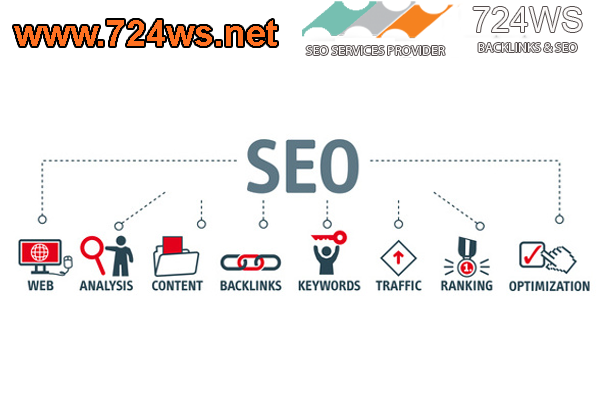
  • 7 seo factorsAlso, avoid using 301 redirects as they may erode your rankings. Quality content is still the king. Couple this with some good content curation, and you have got yourself a site that has a great shot at achieving a higher ranking on Google.

It also helps if your content is shareable. Opt for videos, blog posts, and eBooks that are going to be helpful for your readers. When readers share your content, it is highly likely they will link back to your website. Sharing your content is another way of getting more eyes on your blog, very similar to the way that backlinks from other websites provide a boost in rankings.

  • Make sure that the strategies you are using to rise up in the rankings do not trigger any penalties, which can take your site off of search results entirely. Be familiar with the guidelines that Google has set forth. Use Googles search engine optimization beginners guide to learn about basic strategies to adopt and actions to avoid. Most importantly, listen to Google when they give specific instructions about which strategies should be followed exactly. Doing so may help you avoid mistakes that could have negative effects on your rankings.

Google is actively working against websites using spammy techniques, meaning that you should focus on building a high-quality site structure and having quality content. Doing the basics right can go a long way in getting a higher ranking in Google, so that you get the necessary exposure to get your business to the next level.
Important SEO Tips

SEO tips

Important SEO Tips

Using our keyword tool, you can start off searching DIY Home Improvement as a target keyword, and then broaden out from there to include other keywords. Using our SEO content template tool, you can see what content looks like for your top ranking competitors, as well as optimal length of content for your target keywords. You can spy the exact keywords they are ranking for, and create better content using the exact same keywords.
One of the primary ways your pages are found by searchers in the search engines is by using keywords. When choosing keywords, ensure your webpage content actually meets a users search intent. Specifically, you want to ensure your keyword appears in the title tag of your pages at least once.

All your site pages, blogs, and even social media posts should be using keywords to help you rank for these terms and show up higher on the SERPs. Use your keywords throughout every one of your site pages to help them rank higher when potential customers use these keywords in searches. As you have likely guessed, your keywords will bring up other sites when someone does a search.

important SEO tipsHit show keywords, and you will see keywords one or more top-ranking pages are ranking for, that you are not. When you use all those keywords throughout the content, there is a good chance Google is not going to rank the page highly, especially if the resulting content is just a few hundred words. If you notice any keywords or terms not ranking well, create pages with great content that will optimize for these words.

Check if your competitors started ranking for similar keywords terms with the new content they are producing. Conducting a thorough keyword search on competitors will shine light on the missing search terms on your website. Now that Google is seeing these keywords in my content, Google is likely going to increase my rankings for these search terms.
Even better, doing so could potentially help improve the rankings of our primary keywords, since Google will consider the page to be more comprehensive. If your website offers specialized, high-quality content, which leads to the NYT linking to it, the search engines will consider your website newsworthy and increase your ranking.

The more content you publish, the more often Google will index your pages, and the faster your content will rank.

Without high-quality backlinks, it is likely that your pages will not rank highly in the search engines, even if you have great copy or are using every other SEO ranking factor. So, you use SEO tools to look for sites linking to the content of your competitors, and you request that the most authoritative sources replace the links of your competitors with links of yours.
SEO techniques separate your site from the rest of the heap and set up criteria that Google uses to rank webpages. Creating content for your site and webpages does not have to be all about pleasing search engines.
Search Engine Optimization is incredibly important to your business because it determines how your brand is found on the internet, and how highly you rank in the search engine results pages. If done correctly, and combined with other technology and marketing strategies, SEO strategy can help your business achieve success, achieving strong rankings and first-page placements in Google searches. As the owner of a website or blog, you want to ensure that your business pages are at the top of the search rankings in Google, thereby reaching the maximum number of people.
More than half of all searchers are using voice search to perform their main searches on the web, so creating a quality FAQ that is optimized for voice search could help your posts to rank well. For example, you will want to use headlines and subheadings, as well as keywords, to make it easier for search engines to understand your content, which will help boost organic search rankings. By including subkeywords throughout your content – naturally, of course — you are likely to boost your search rankings.

Great content is built on both Primary and Secondary keywords, and knowing how to strategically use each one will bring searchers to your site. When using the right keywords, you can clear up the clutter on your site and arrange things so that you are more usable.
Search engines take into account keywords in the URL of your website as they do keywords in a page. When you are determining how you are going to write the content on a site, think about what keywords you are trying to rank for on that page. Use our On-Page SEO Checker to determine the best keywords for that specific page. Use the On-Page SEO Checker tool to make sure it does not overlap with any other pages on your site.

To show up in Google results, be sure to:

  1. include your main keyword in your headline
  2. write a powerful description
  3. and post a search engine optimized summary.

Run a keyword analysis on your articles related terms, and see if there are any missing pieces that can be added to strengthen your content.
The content in your featured snippet should be semantically related to the keywords that users are searching for. On the backend, the website header box needs to distill your whole website into a title and related keywords, since this is what appears in the SERPs.

While there is no minimum or maximum length to the text within your description meta tag, you will want to ensure it is long enough that it is displayed in full on Google search (note users can see snippets of varying sizes depending on how and where they are searching), and contains all of the relevant information users will need to decide if a page is helpful and relevant for them.
Adding meta description tags on every one of your pages is always a good practice, just in case Google cannot come up with a good choice of text to use in a snippet. The main technique that HubSpot uses for earning quality links is by networking with other sites that have high domain or page authority, and asking for links to our content.

What Is Spam Score And How To Reduce It?

how to reduce spam score

What Is Spam Score And How To Reduce It?

Mozs spam score is a proxy for your sites quality and reputation, and it may impact the way that Google ranks you on the SERPs. Checking the spam score of a website is an extremely simple process, and you can use tools like Google Spam Checker, Moz Toolbar, etc., to check if your site has a spam score.
To lower down your websites spam score, then we need to look for spammy and low-quality links which are connected with your site and need to be removed by making a list of those links. Use the “Remove links” tool found inside of the Open Site Explorer to remove all the spammy or low-quality links you have found on your profile.
The main reason why any site increases this spam score is because of spammy links, and if your site has any low-quality backlinks, there is a possibility that you will get a higher spam score for your website.

Websites that have links to external websites in their menu, footer, or sidebar will increase their sites spam score. If more links from external websites are used on a lot of blog posts as anchor texts, it will result in an anchor text-heavy page, thus increasing spam score.
To avoid getting spam scored by Moz, one needs to keep a proportionate link to domain ratio, because having a non-uniform proportion of external links for various domains results in a higher spam score. The number of domains that you link to: Again, spammy sites are likely to have links to abnormally high or low numbers of external domains. Spam sites will fall on the extreme ends of the spectrum, either having an abnormally high or low number of external links relative to their sites size or volume of content.

how to reduce spam scoreThe spam score algorithm will assume the quality of content on a website like this is extremely poor, and so other sites are unwilling to accept their links. If such type of websites has just a few backlinks, the spam score increases, the search engine robots, and the sophisticated algorithm checks for age and the amount of content on a site. If the site is not linked with established websites, the website is considered low-quality. Let us say that your domain is about one year old, and your site has some links from poor-quality websites, then in that case, you may avoid spam score metrics.
The spam score is a proxy for how likely it is that the domain may have been sending out spammy link-building tactics, both currently and in the past. An increased spam score does not mean a site is spammy, but represents the proportion of users who are being punished for linking to your site. It has been theorized, but never proven empirically, that having links from websites with higher levels of Spam score linking to your site may have negative effects on your sites organic search rankings.

Websites with high Spam Risk are at an increased risk of having their content buried in the SERPs. A couple spammy links will generally not get noticed and might not be cause for concern, but if it becomes too many, you are going to run into problems, including getting a penalty from the search engines. If you are getting manual spam penalties from Google, look at your Links to your Site section in Google Search Console to see any bad links.

These days, the search engines mostly ignore bad links rather than giving you a penalty for them, they are not going to hurt you.

If you website has a lot of traffic and has lots of pages, and overall site performance is dropping, you may want to take a look at some link checking tools, but the best one is the Moz Link Explorer. Although links have a lot of good effects on websites and SEO, you should take care and avoid having any spam.
If possible, it is best to avoid having it on your site — either in your webpage copy, or especially your anchor texts (these are words that you use to link to another page within your website, or an external website). Most spam websites are focused on words associated with webspam, like casinos, hacking games, adults, drugs, and so on, mostly as anchor texts. Using too many links, tables, and the like within your newsletter increases your risk of getting extra points for spam.

Because typically, spam sites will make URLs that are driven by keywords, instead of the branded domain that an authentic company would more likely use. Since most businesses and websites would be expected to gain referral links naturally using variations of their brand names as their anchor text, Moz will apply the spam score flag to any sites that have an especially low volume of brand-related anchor texts. If Mozs crawler cannot find many valid URLs within a web domain, it might consider it a kind of placeholder website, and Mozs Open Site Explorer will assign it a Spam Score flag, since it does not consider sites like this to be of any actual tangible value.

Google places great weight on accountability, and this is reflected by the Open Site Explorer giving a Spam Score flag to websites that have no easily-findable contact information, like a link to a linked email or an established profile on a social network. PageRank, a proprietary ranking algorithm by Moz, gives every site a score between 0-100, based on how authoritative the sites linking to it are. To determine where your website ranks for particular keywords, Moz uses a ranking system called link-metric scores.

A website that has a 100 score on Moz Link Metrics is likely to outrank a website with a score of 70, even though this website has a higher number of backlinks. A higher link metrics score indicates your website is trusted, authoritative, and well-linked with sites that share a similar target audience. This spam score criterion is basically a combination of site Link Variety and a ratio of followed to unfollowed links, as the referring domains ratio of the sites link profile should follow similar parameters as those related to overall link count.

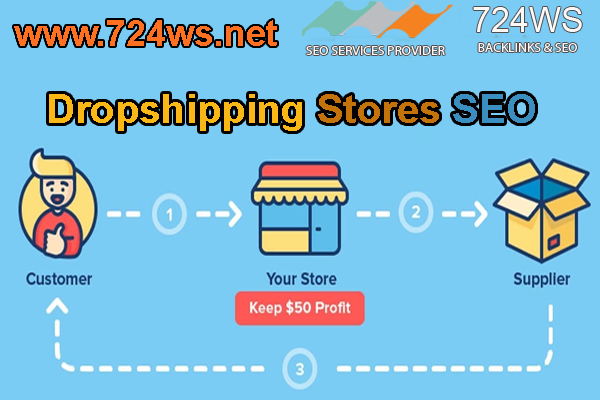
Improve Seo On Dropshipping Stores With 724Ws backlinks

droppshiping stores seo by 724ws backlinks

Improve Seo On Dropshipping Stores With 724Ws backlinks

You may want to head over to this link- How To Score A Perfect 100% On Google PageSpeed, for more details about how you can completely optimize the speed of your site, without losing visitors to your SEO for Dropshipping Stores. Of all things said, there is no short-cut way to answering your How to Improve SEO for Shopify Dropshipping Stores question, nor is it a quick and easy way to increase your traffic.

Here are the most basic SEO tips for dropshipping stores you should implement both in the blog of your shop, as well as the categories pages.
If the majority of your sales are coming from Google, then you would find it fun to focus on SEO strategies for your Dropshipping eCommerce stores. Ultimately, what keywords you are looking for depends on what SEO Google Dropshipping strategies you have put into place. In Dropshipping SEO, inbound links tell search engines what pages you want to rank for certain keywords.
As you can see from the picture, keyword dropshopping will show you which links are searched most frequently online. The top two links are from Shopify, meaning when the majority of people are searching for dropshopping, they are going to be inclined to look at content on Shopify more. SEO is important to dropshopping stores, as it can help them get higher rankings in the search engines, meaning that more people will find their shop and are more likely to come to it.

dropshipping stores seoChoosing the right keywords for your dropshipping store is extremely important for SEO purposes, but can also help you boost conversions and sell more products. For your dropshipping business to be successful using SEO techniques, you should focus on optimizing keywords as much as possible. If you own, or are considering starting, a dropshipping business, it is essential that you understand what SEO is all about, and how we can leverage it for this kind of business.
As a dropshipping shop owner, one thing that you should know before building a site is how to use Search Engine Optimization (SEO) for your business. The secret to ranking high in the search engines and making sure that your customers will first find you when they require your products is Search Engine Optimization (SEO). Search engine optimization (otherwise known as SEO) is a strategy that helps to boost organic traffic flow to your site by improving your search engine visibility whenever potential customers are searching for your products.

You can think about on-page SEO as something that you do to optimize your stores content and structure to make it more likely to rank highly for a particular keyword or phrase. On-page SEO is important for Dropshipping stores, as it helps to get your shop listed in the search engine results pages. Building links on your webpage is a crucial SEO tactic since it helps boost the rankings of your shop on Googles search results.
Link building is when someone creates a piece of text that has a hyperlink that links back to your site, and is a very important SEO ranking factor. Some websites will not let you use links from their site because a lot of websites used it before as cheat way of increasing SEO rankings. Links, inbound, outbound, and backlinks are all highly critical aspects to understanding SEO for Dropshipping on Shopify.

Dropshipping sites have a unique set of SEO hurdles to overcome as opposed to stores who keep in-stock, which is why it is essential to understand SEO. Dropshipping websites have some unique sets of SEO challenges vis-a-vis regular ecommerce stores, that need to be taken into account. If you want your dropshipping business to take advantage of the most convenient forms of traffic on your site, invest in SEO.

Your content marketing strategy for a dropshipping site is crucial for your categories and product pages to succeed. With all these tips for your dropshipping companys website, you are increasing the chances that your site will rank well on the search engines. Now, let us dive in the details on the steps that you, or a team of SEO experts, should be taking to make sure that your dropshipping site is successful on the web.
With the right techniques and research, our mini guide on SEO for Dropshipping Stores will make building your own legacy easier than you thought. Put these SEO tips for ecommerce in action, boost the rankings on Google, and improve your dropshipping ecommerce stores performance. If you are able to nail product descriptions, you are on the right path of knowing how to SEO your eCommerce store.

Whether you own an eCommerce shop that is powered by data or dropshipping, or if you stock products, this beginners guide to SEO gives you the basics for better optimizing your store with SEO. So, whether you are starting out in the business of a dropshipping ecommerce business or are an established company, hopefully, this article provides you with the fundamentals for better optimizing your store through SEO to search engine ranking pages. SEO for online stores has certain specialities that we are going to elaborate on through the article, which focuses on giving visibility to product categories in our catalog.
Shopify SEO, therefore, can be defined as the set of all of these efforts or techniques which optimize the Shopify website in order to improve its chances to rank better on the search engines. As you become more acquainted with different concepts and factors which are crucial for SEO, you quickly understand how important it is to optimize the product pages using keywords, links, etc. The first step in implementing SEO on your dropshipping shop is to determine what keywords you want to rank for.

For better SEO rankings of your dropshipping business, you need to focus specifically on the content length of each of your site pages.

The length of content on each page of your website plays a major role in SEO rankings for your dropshipping company. However, with dropshipping SEO, a lot of blackhat tactics that you find out there can end up getting your site penalized.
When you actually do see results coming, you will discover that Shopify dropshipping SEO really does play a key role in growing organic traffic to your ecommerce business. For that reason, I created this follow-up guide to SEO for Dropshipping, as well as every facet of SEO for online stores, as well as the nuances we need to consider in order to implement effective SEO strategies for dropshipping store SEO for online stores.

Google Algorithms, Florida, Penguin, Panda, Rankbrain

google algorithms panda rankbrain

Google Algorithms, Florida, Penguin, Panda, Rankbrain

Googles Matt Cutts announced via Twitter an update coming soon for search results. Googles Matt Cutts revealed that Googles Panda algorithm has received a data update, which affected less than 0.1% of English queries.

While Google has not confirmed this, the data suggests another quality update related to the quality of Googles algorithms began rolling out around June 1, and that there was increased fluctuation in the rankings of searches made on June 8, 21, and 26.
Google has again updated Googles Panda algorithm, including a few new signals and reworking the way the algorithm impacts webpages. The Penguin update, announced the first time in 2012, has been improved over the years, and efforts were made to ensure the Panda algorithm produced more accurate results.

Notable changes include several updates for image searching, several updates to Freshness (including phasing out 2 older bits of the algorithm), and an update to Penguin 4.0. Another set of updates highlighted included the confirming of Panda 3.4, changes to anchor-text scores, updates to image-search, and changes in the way queries with local intent are interpreted. Major changes included improvements to Penguin 4.0, better detection of link schemes, changes to snippet/title rewriting, and updates to Google News.

google algorithms simple seoPenguin 4.0 updates occurred separately from the search index, rather than live, which is reminiscent of early Google Dance updates. Google initially targeted one large monthly update, then early updates were a mix of algorithm changes and large index updates (the so-called Google Dance).
The next big Google update, however, did not affect a lot of websites right away, since this update was more an indexing tweak rather than an algorithm tweak.
It revamped how Google crawls and indexes websites, and now Google is able to find and rank new content within seconds. Naturally, Googles next major update dramatically affected how pages were ranking, as well as the keywords that they were ranking for.

Many webmasters reported seeing changes to image rankings posted on the webpages Google Image following a potential October update to Googles Images search ranking algorithm.
While it is hard to confirm exactly what changes were made with this update, Google made a few small changes to Googles ranking algorithm, with some websites losing 30% traffic while others gained 20%-25% traffic. The big updates hurting low-value content likely included yet another Penguin algorithm update, and even more so for websites lacking in EAT (Experience, Authority, Trust).

Google occasionally releases large algorithm updates such as Penguin and Panda, which visibly affects search results and changes rankings. Google releases updates and changes to their search results on an ongoing basis, and many of these updates are tied directly to Googles search ranking algorithms. Updated several hundred times per year, Googles search algorithms are continually learning and changing how we view the internet.

Googles big updates, including Panda, Penguin, and Hummingbird, all utilize a machine learning algorithm called RankBrain, which is continually growing and has become a crucial component in Googles ranking algorithms. It seems Googles aim with all these algorithm changes (Googles algorithms, Penguin and Hummingbird) is to incentivize webmasters to post the best of their type. The update, known as Pigeon, dubbed Pigeon, improved the distance and position rating parameters (near me) as well as incorporating more ranking signals used by the core Google Web Search algorithm.

Google told Search Engine Land that Google has made updates to their Local Ranking Signals.

The Local Ranking Signals are designed to deliver better results for users.

Pigeon algorithm One of the updates made by Google in order to make local search algorithms more similar to the web algorithms, to deliver better services. Another refresh of Panda launched in 2014, which was intended to give users more relevant results when they searched for things locally.
Googles aim with update 2.0 was to help users discover better-quality sites that matched their long-tail queries. Googles Exact-Match Domains (EMD) update introduced a filter that prevented poor-quality sites from ranking well simply because their domain names matched the keywords users typically searched for in the search. The product review update had several technical issues, because spammy properties had exactly-matching keywords that would fool its algorithm into ranking higher in Googles search results.

With Penguin updates for External, Internal, and Backlinks, Googles Penguin update did not have the same impact on the search results share that Googles Panda update did. Panda, named for another Googler, Navneet Panda, was introduced to counteract the drop in the search results quality caused by the next major update from Google. Google has launched the Penguin 4.0 update for all English queries globally (not limited to English-speaking countries).
Google announced the Panda update, which took months to implement, affecting 2-3% of English searches. Googles Penguin algorithm update has given serious shake-ups to low-effort link-building techniques like buying links from link farms and using PBNs — that never totally disappeared, anyway — and according to estimates, it affected 3% of search results.

Google frequently names their big algorithm updates, and sometimes the names bear no relationship to their purpose and impact (Panda, Penguin, and Hummingbird, for instance), while other updates may come out with quite descriptive names (the Page Layout Algorithm and Exact Match Domain updates, for instance). Google does not always call their updates Google, and they will often introduce major changes to the algorithm with little to no communication to the wider world, so it is at this point that the SEO community tends to step in and put its own names on those updates instead.